
Introduction
FastClaw is a single-binary AI agent runtime for building, managing, and operating agents.
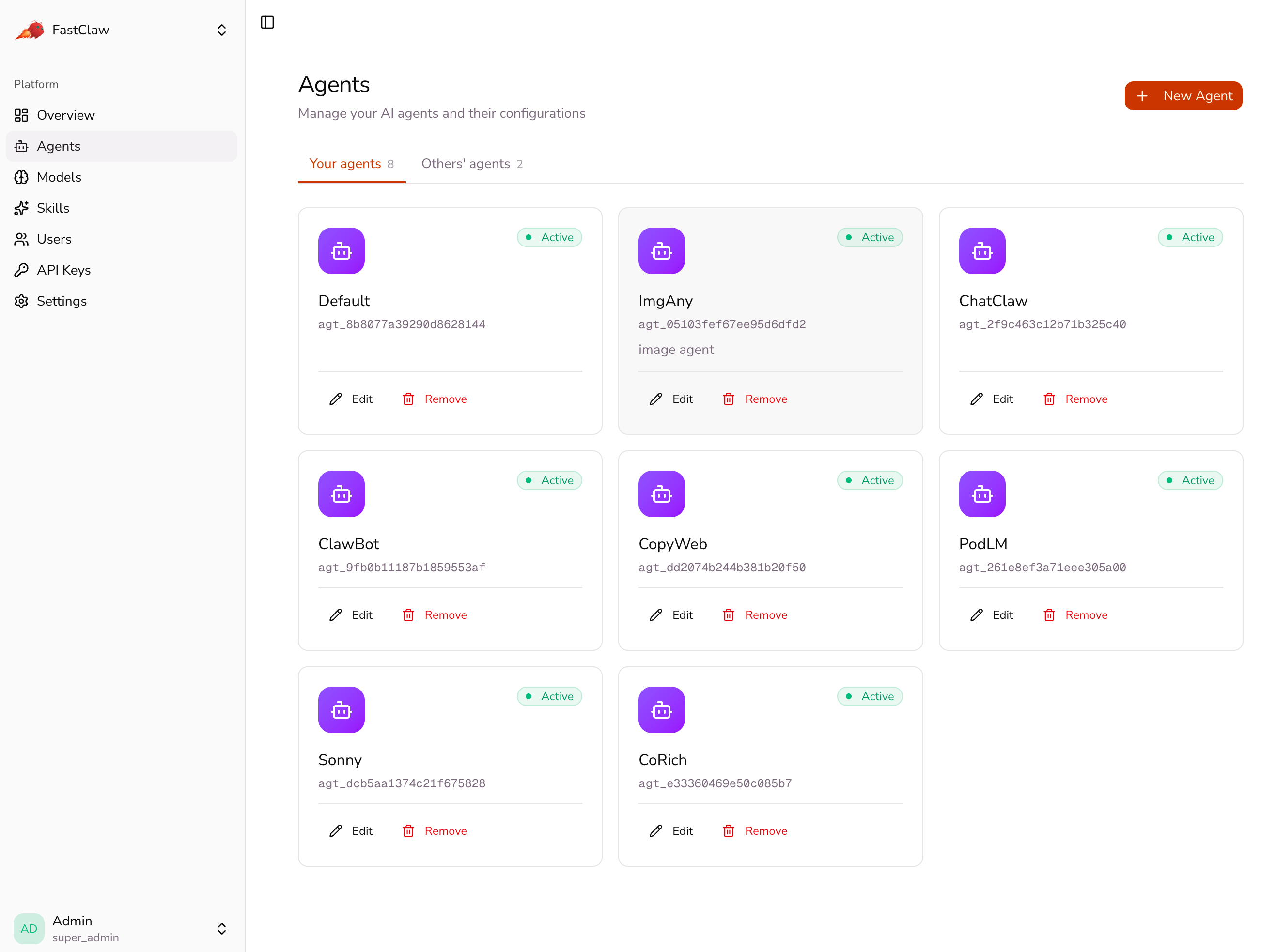
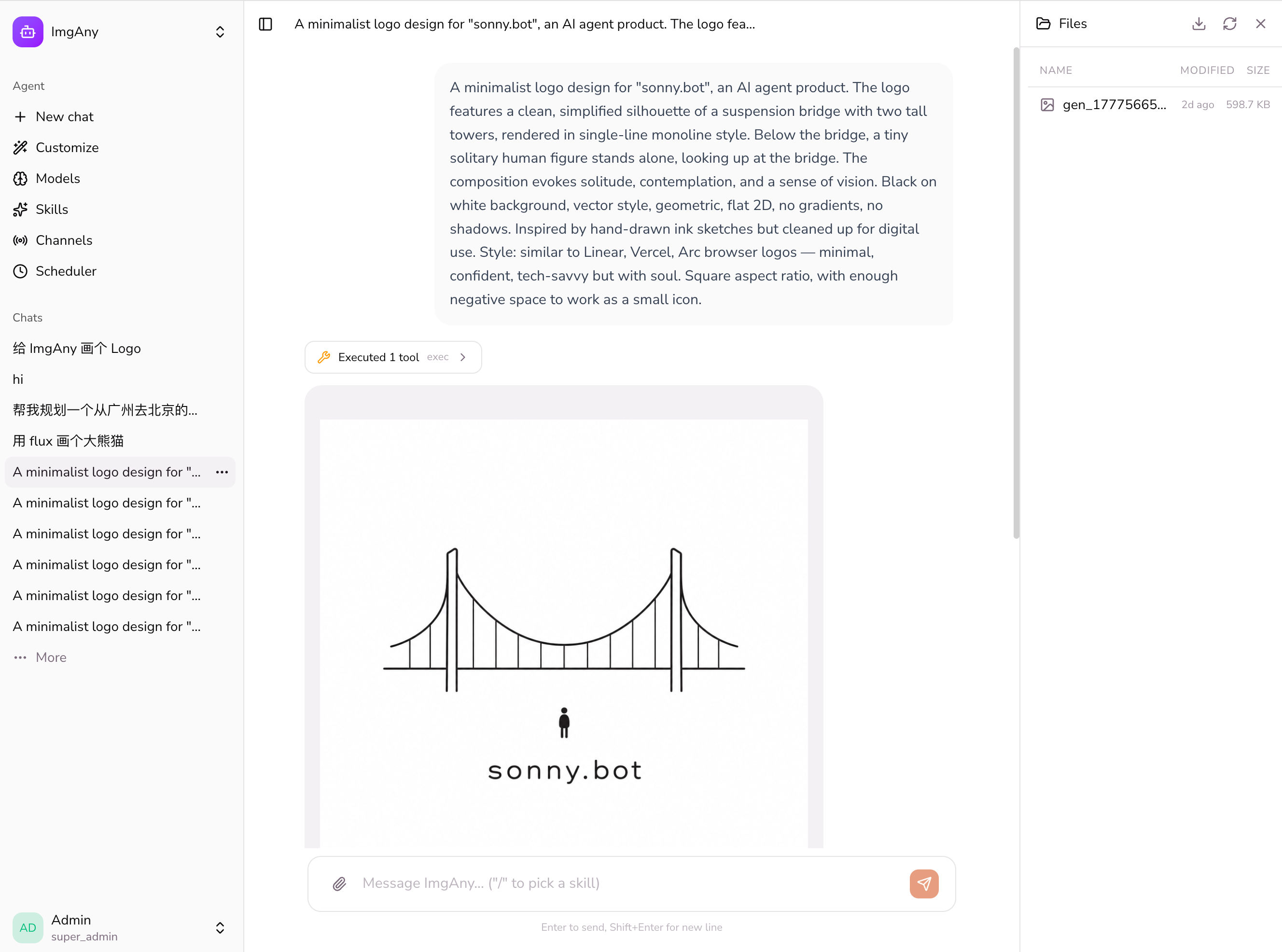
FastClaw is an Agent Factory. It creates, manages, and runs AI agents. Each agent has its own personality (SOUL.md), identity, memory, skills, tools, model configuration, channels, scheduler, and session history.
The runtime is intentionally small at the deployment boundary: one Go binary, SQLite by default, Postgres for distributed deployments, and a dashboard at http://localhost:18953.
What FastClaw Provides
| Area | Capability |
|---|---|
| Agent lifecycle | Create, edit, share, delete, and scope agents per user |
| Identity files | Store SOUL.md, IDENTITY.md, MEMORY.md, USER.md, TOOLS.md, AGENTS.md, and related files in the database |
| LLM routing | OpenAI-compatible and Anthropic-compatible providers, with per-agent overrides |
| Skills | Bundled and installed skills, global or agent-private |
| Tools | File access, shell execution, web fetch/search, memory search, MCP tools, plugins |
| Sandbox | Docker, E2B, or Boxlite backends for tool execution and code previews |
| Channels | Web chat plus Telegram, Discord, Slack, WeChat, LINE, and Feishu bindings |
| Scheduler | Agent-created cron jobs with dashboard inspection and pause/delete controls |
| APIs | OpenAI-compatible /v1/chat/completions, app-user provisioning, usage/quota endpoints, and dashboard REST APIs |
Mental Model
FastClaw separates three concerns:
- Bootstrap configuration comes from
FASTCLAW_*environment variables: port, bind address, storage backend, sandbox backend, object store, Redis, logging. - Runtime configuration lives in the database: providers, channels, tools, default models, agent overrides, scheduler settings, and plugin settings.
- Agent workspace state is isolated by agent, user, channel, chat session, or project depending on the calling path.
Storage Layout
~/.fastclaw/
  fastclaw.db
  skills/
  agents/
    <agentId>/agent/skills/
The database is the source of truth for users, agents, sessions, API keys, scoped config, and agent system files. Skill folders stay on disk so they can be mounted into sandboxes.